How to Choose a Concrete Core Drill
Quick takeaway: Choose by documented capacity for your hole (diameter + depth), material/rebar, wet or dry drilling method, handheld vs stand, power source, spindle/thread, and bit availability, not by invented ratings.
Decision order
- Material (concrete, reinforced, masonry, asphalt)
- Hole diameter (must fit under machine max, handheld max and stand max may differ)
- Depth (bit working length ≠ stand travel ≠ hole depth)
- Reinforced vs plain concrete
- Handheld vs stand
- Wet vs dry (machine + bit both must support)
- Corded vs cordless
- Spindle / thread
- RPM range vs bit max RPM
- Compatible bit availability in the catalog
Start from the hole, then apply hard gates
A concrete core drill is selected by documented eligibility, not by a reputation score. Write down material, likely reinforcement, finished diameter, full depth, orientation, wet or dry method, handheld or stand setup, available power, and the bit connection you can actually support. Each item is a gate. A machine that fails one gate is not saved by excelling at another. The Core Drill Finder applies those gates to the live catalogue.
Unknown values stay unknown. A blank handheld maximum cannot be filled from a stand maximum. A blank wet flag cannot be filled from a water-tank accessory on a different SKU. SPEC-MATCHED records may still contribute a sourced field inside tools, but they are not treated as ordinary indexed model pages. VERIFIED means the published configuration passed documentary gates, not that CoringSpec physically ran the machine.
Capacity is mode-specific
Maximum diameter is only meaningful in the operating mode that will be used. Hybrid machines may publish different handheld and stand limits. Using the larger number for the smaller mode is a selection error, not a clever reading of the spec sheet. If only a general maximum is published, do not invent two mode limits from it. If the required mode is undocumented, the machine does not pass a hard diameter requirement in that mode.
Start with the actual opening, including sleeve and clearance. The bit diameter must exist in a documented family, and that diameter must remain within the chosen drill’s capacity in the intended setup. Capacity is not a prediction of cutting speed or bit life. Compare surviving machines on configuration completeness: motor-only versus complete rig, included stand versus separate stand, documented water path versus unknown.
Material, reinforcement, and location approval
Concrete, reinforced concrete, masonry, and asphalt are separate evidence fields. A motor that can spin a bit does not prove the attached bit is right for the substrate. Reinforced-concrete work needs machine-method evidence plus a bit variant that actually addresses reinforcement. Plain concrete evidence is not expanded into a rebar claim.
Post-tensioned or prestressed risk is a location-approval problem. Compatibility cannot tell you whether a tendon is in the path. When that risk is indicated, stop automatic selection and seek engineering review. The reinforced-concrete application organizes equipment questions only after that safety decision.
Handheld, stand, power, and connection
Handheld equipment is eligible only where handheld capability and the relevant handheld limit are documented. Stand-mounted equipment requires a documented motor to carriage relationship, enough travel, and an approved fixation plan. Brand match is not stand fit. Motor-only listings can be stand capable without including a stand. Review the stand map as a reference, but stand records are not auto-published by the content queue.
Corded versus cordless is a power-platform distinction. Compare kit contents so a bare tool is not scored as a complete operating package. The spindle must connect to the bit directly or through one documented adapter. Adapters do not raise capacity or invent RPM. See handheld versus stand and the thread guide.
Method, speed, depth, and included equipment
Wet and dry are system properties. Both the machine and the exact bit must support the method, and the site must control slurry or dust. Overhead wet restrictions in a manual are not overridden by this guide. Use wet versus dry to understand consequences, then read the selected manuals.
RPM evidence is split: machine settings, bit maximum if published, and labeled reference charts. Depth evidence is split: requested penetration, working length, overall length, stand travel, and documented extensions. Configuration notes tell you whether the offer is a motor, a kit, or a complete rig. Missing included-items fields stay unknown. After hard gates, open the commercial drill roundup only as a browsing surface, not as a substitute for the finder.
Putting the order to work on a real hole
Write the hole first: 5 inches, 8 inches deep, reinforced wall, wet allowed, one sided access. A machine with a 6-inch stand maximum and no handheld maximum cannot be used handheld. A machine with a 4-inch handheld maximum fails. A wet only motor cannot take a dry only bit. A motor-only offer that is stand capable still needs a documented stand and fixation path before it is a complete system. Those are eligibility failures, not close calls to be averaged.
When two VERIFIED machines both pass, compare configuration notes and included equipment rather than wattage folklore. One may ship as a complete rig missing only the bit. The other may be a motor that still needs a stand, anchors, and water hardware. The commercial roundup can help you browse survivors. It cannot restore a failed gate. Recheck exact model identifiers because similar names hide different voltages, kits, and spindles. Then confirm a bit in the Bit Finder before purchase.
If the hole later grows from 5 inches to 6 inches, restart the gates. A previous pass is not a standing approval. If depth grows from 8 inches to 14 inches, working length and travel must be checked again. Treat each change as a new job in the System Builder rather than editing one field in isolation and hoping the rest still holds.
Catalog snapshot (verified machines)
| Drill | Max Ø | Setup | Thread |
|---|---|---|---|
| BLUEROCK 4Z1 | 4 | Handheld / stand | 1-1/4"-7 UNC |
| BLUEROCK 8Z1 | 8 | Stand | 1-1/4"-7 UNC |
| BLUEROCK 10Z1 | 10 | Stand | 1-1/4"-7 UNC |
| Milwaukee MXF301-2CP | 6 | Handheld / stand | 1-1/4"-7 UNC |
| Husqvarna DM 220 | 6 | Handheld / stand | 1-1/4"-7 UNC Male (Outer) / G 1/2" Female (Inner) |
| Husqvarna DM 230 | 6 | Handheld / stand | 1-1/4"-7 UNC Male (Outer) / G 1/2" Female (Inner) |
| Husqvarna DM 540i | 4 | Handheld / stand | 1-1/4"-7 UNC Male (Outer) / G 1/2" Female (Inner) |
| Husqvarna DMS 240 | 10 | Stand | 1-1/4"-7 UNC Male (Outer) / G 1/2" Female (Inner) |
Important limitations
- This is educational selection methodology, not a commercial “best of” list.
- Missing manufacturer fields stay unknown, we do not invent capacity.
Commercial next step: Best Concrete Core Drills
Related
Sources and methodology
Claims follow manufacturer manuals and product documentation first. Marketplace listings are used only for offer-specific facts. CoringSpec does not treat random affiliate blogs as primary technical evidence.
Products for this page
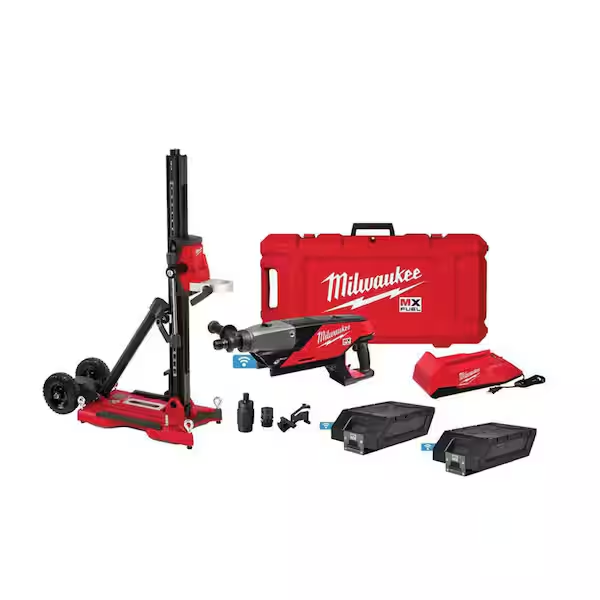
Core drill
Milwaukee MXF301-2CP
6" max · cordless
Premium cordless wet or dry drilling reinforced-concrete coring up to 6" with stand capability.
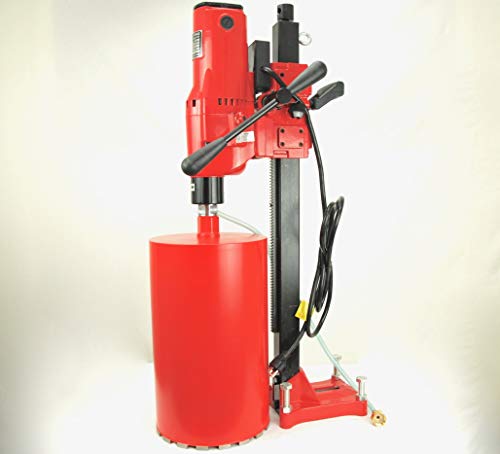
Core drill
BLUEROCK 10Z1
10" max · corded
Large-diameter value stand rig up to 10" for commercial concrete and utility penetrations.

Core drill
Husqvarna DM 406 H
25.6" max · hydraulic
Heavy-duty hydraulic stand coring approaching 24, 25.6" in reinforced concrete.

Core drill
Hilti DD 150-U
6.375" max · corded
Premium versatile handheld or stand mounted use benchmark up to 6-3/8".
Paid links. Specs on this site come from manufacturer documentation, not from the retailer.