Handheld vs Stand Core Drilling
Quick takeaway: Handheld favors portability and access, stand mounted favors larger diameter, alignment, and higher-capacity systems. There is no universal diameter breakpoint, each machine has documented capacity.
| Requirement | Handheld | Stand |
|---|---|---|
| Small holes | Strong where capacity allows | Often unnecessary |
| Larger diameter | Limited by handheld max | Better when documented |
| Repeat drilling | Possible | Better control |
| Precision / alignment | Lower | Higher |
| Portability | Excellent | Lower |
| Large/deep cores | Limited | Better (travel/anchors) |
There is no universal diameter breakpoint
Handheld versus stand is not a single inch mark that applies to every brand. Each machine has documented capacity, and some machines publish different limits for handheld and stand mounted use. A 6-inch job can be handheld on one VERIFIED record and stand-only on another. Choosing from a forum breakpoint instead of the exact record is how capacity errors happen.
Handheld favors access and portability where the exact model documents handheld capability and the hole fits the handheld limit. Stand-mounted use favors larger diameter, repeat alignment, feed control, and higher-capacity systems where the motor to stand relationship is documented. There is no CoringSpec score that says one setup is universally better.
What handheld eligibility actually is
Handheld-capable in the catalogue means the record documents handheld use, not that every diameter in the motor family is safe or permitted in the hands. Reaction torque, bit diameter, water, and manufacturer instructions still control. A model that can also bolt to a stand may have a lower handheld maximum. Using the stand number handheld is an exclusion waiting to happen.
Cordless handheld platforms add kit questions: batteries, charger, and whether the offer is a bare tool. Those questions do not change capacity math. See Best Handheld Core Drills only after the finder gates pass. That commercial page is not permission to exceed a published handheld limit.
What stand eligibility actually is
Stand-mounted capability means a documented path exists for that motor class to be used on a stand. It does not mean a stand is included. It does not mean every stand from the same brand bolts on. Carriage interface, travel, base type, orientation, and fixation have to be sourced. Vacuum is not inferred from a photograph. Anchors are not inferred from a floor-stand listing.
Stand travel is not hole depth. Wall and overhead orientations are not inherited from floor use. The stand map is a documentary reference. Stand records and stand hubs are not automatically scheduled as Ready to publish items. For browsing after constraints are known, see Best Core Drills with Stand.
Orientation, fatigue, and complete system thinking
Floor, wall, overhead, and angled work change which setup is even eligible. A handheld plan that works on a low wall may be the wrong plan for a large floor opening. A stand plan that works on a slab may lack a documented wall-fixation path. Application pages for walls and slabs exist to keep those questions attached to the job.
Repeat drilling and alignment needs often favor a stand even when a handheld motor could theoretically spin the bit. That is a setup judgment after eligibility, not a reason to ignore published handheld limits. Fatigue and precision are real jobsite concerns, CoringSpec still will not invent unsafe anchoring steps. If fixation evidence is missing, a complete system recommendation stops there.
How to choose in practice
Enter diameter and setup in the Core Drill Finder. If you need a complete chain, use the System Builder. Compare surviving VERIFIED records on documented limits and configuration completeness rather than on which photo looks more like a rig. SPEC-MATCHED machines stay noindex as model pages even if a sourced field appears in a tool.
After a setup is chosen, still resolve bit diameter, method, thread, RPM, and depth. A stand does not fix a wet or dry drilling mismatch. A handheld motor does not fix an undersized working length. Use this guide together with how to choose a drill and the size chart. Always confirm the current manual for the exact model before work.
When a hybrid machine still forces a choice
Some VERIFIED records document both handheld and stand use with different maxima. That does not mean you may use the larger number in the hands. If the handheld maximum is 3 inches and the stand maximum is 8 inches, a 5-inch hole is a stand job on that exact model. A photo of a motor on a carriage does not change the handheld field. A cordless platform does not raise the handheld maximum.
Conversely, a stand capable listing that ships motor-only is not yet a stand system. You still need a documented pairing, travel, and fixation for the orientation. Wall work does not inherit a floor vacuum base. Overhead work does not inherit a floor anchor pattern. The commercial handheld and stand roundups are browsing surfaces after these gates. If fixation evidence is missing, leave the complete system result incomplete rather than inventing anchors.
If you change from a 2-inch inspection hole to a 7-inch sleeve on the same motor, re-read both maxima. Hybrid documentation is easy to mis-apply under time pressure. Write the mode on the job card: handheld or stand, not “either.” The finder can then apply the matching field instead of a blended number that does not exist on the record.
Among VERIFIED machines counted for this handheld-versus-stand guide, 1 records document handheld only, 19 document stand mounted only, and 14 document both modes. Dual-mode records still require the matching maximum for the mode you will use. The larger number is not a handheld permission.
VERIFIED mode examples on this guide
On the handheld-versus-stand guide, BLUEROCK 4Z1 documents handheld capability as Handheld / stand, handheld maximum 4", and stand maximum 4". Those two maxima are not interchangeable on this model.
On the handheld-versus-stand guide, BLUEROCK 8Z1 documents handheld capability as Stand, handheld maximum not specified, and stand maximum 8". Those two maxima are not interchangeable on this model.
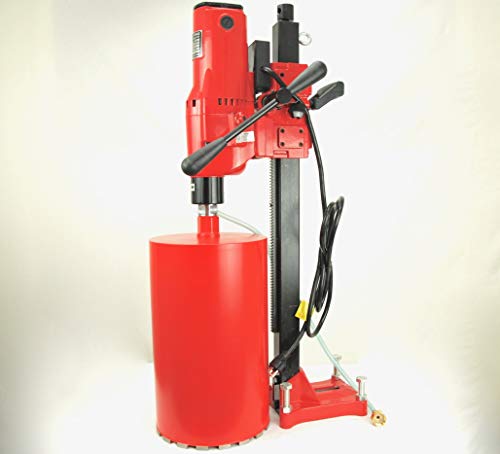
On the handheld-versus-stand guide, BLUEROCK 10Z1 documents handheld capability as Stand, handheld maximum not specified, and stand maximum 10". Those two maxima are not interchangeable on this model.
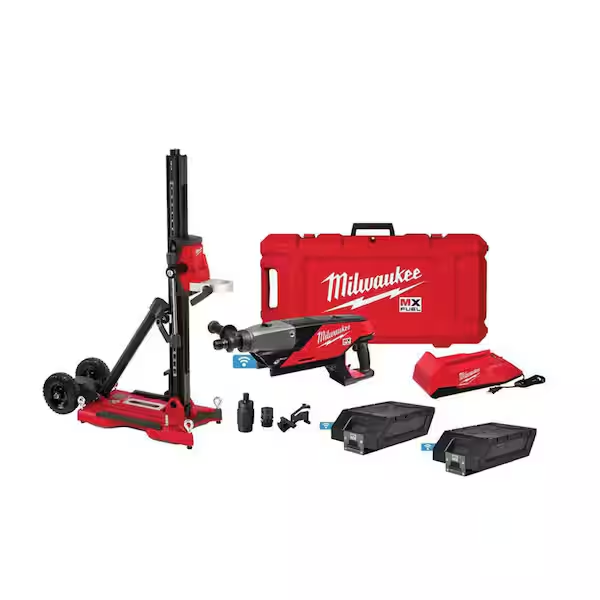
On the handheld-versus-stand guide, Milwaukee MXF301-2CP documents handheld capability as Handheld / stand, handheld maximum 6", and stand maximum 6". Those two maxima are not interchangeable on this model.
On the handheld-versus-stand guide, Husqvarna DM 220 documents handheld capability as Handheld / stand, handheld maximum 4", and stand maximum 6". Those two maxima are not interchangeable on this model.
On the handheld-versus-stand guide, Husqvarna DM 230 documents handheld capability as Handheld / stand, handheld maximum 3", and stand maximum 6". Those two maxima are not interchangeable on this model.
Handheld roundup · Stand roundup
Related
Sources and methodology
Claims follow manufacturer manuals and product documentation first. Marketplace listings are used only for offer-specific facts. CoringSpec does not treat random affiliate blogs as primary technical evidence.
Products for this page

Core drill
Husqvarna DM 406 H
25.6" max · hydraulic
Heavy-duty hydraulic stand coring approaching 24, 25.6" in reinforced concrete.

Core drill
Hilti DD 150-U
6.375" max · corded
Premium versatile handheld or stand mounted use benchmark up to 6-3/8".
Core drill
BLUEROCK 10Z1
10" max · corded
Large-diameter value stand rig up to 10" for commercial concrete and utility penetrations.
Core drill
Milwaukee MXF301-2CP
6" max · cordless
Premium cordless wet or dry drilling reinforced-concrete coring up to 6" with stand capability.
Paid links. Specs on this site come from manufacturer documentation, not from the retailer.