Wet vs Dry Core Drilling
Quick takeaway: Wet is not always better, and dry is not usable anywhere. Machine and bit must both support the intended method.
| Factor | Wet | Dry |
|---|---|---|
| Cooling | Water | Air / system dependent |
| Dust | Reduced, slurry generated | Dust extraction important |
| Slurry | Yes | No wet slurry |
| Bit requirement | Wet-rated bit | Dry-rated bit |
| Machine requirement | Wet capable | Dry capable |
| Material fit | Product-dependent | Product-dependent |
Wet and dry are agreement tests, not a quality contest
Wet is not always better, and dry is not usable everywhere. The machine, the exact bit variant, and the work plan must all support the same method. A wet bit on a machine that does not document wet use is an exclusion. A dry plan on a wet only bit is an exclusion. Removing a water fitting does not create a documented dry path. Adding a third-party tank does not create a documented wet path if the machine record does not support it.
This guide explains consequences. It does not declare a universal winner. Material, diameter, orientation, occupied-space rules, and manufacturer restrictions decide the eligible path. Overhead wet use may be restricted because water can enter a motor. Horizontal wet use changes slurry direction. Dry use without specified dust control is not a complete plan.
What wet actually requires
A wet path needs a wet capable machine, a wet capable bit, a water supply that matches the equipment connection, and a plan to contain and collect slurry. Diameter-specific rings or collectors are not assumed compatible with every drill. Included-equipment fields stay unknown when blank, a kit photograph is not a packing list. The water-systems map is a documentary reference and is not placed on the automatic publish queue.
Wet cooling is often required by the bit manufacturer for concrete. That is a documentation fact, not a CoringSpec performance claim. Slurry still has to be managed on floors, walls, and around electrical equipment according to site rules. This site does not invent flow rates. Confirm the current manuals for the exact motor and bit.
What dry actually requires
A dry path needs explicit dry capability on both the machine and the bit, plus dust controls the manufacturer specifies for that equipment. Absence of water is not dry approval. Some materials or diameters may have no complete documented dry path in the catalogue. In that case the honest result is to use a documented wet path where permitted, or to choose another approved method , not to force a wet only barrel dry.
Dust accessories have their own evidence gates. Generic vacuums are not catalogued as coring extraction systems. Dust-control records remain STANDARD or map-only until their own evidence threshold is met and are not auto-scheduled. If required controls cannot be established, stop. See the live catalogue counts below for how many drill and bit records currently document each method, those counts are queried at render time.
How to choose without guessing
Decide method from site constraints and documented equipment, then filter finders. Do not pick a favorite motor and then hope the bit can switch methods. Combined-capability machines still need a method decision for the specific bit and environment. Combined-capability bits still need a machine that shares that method.
Use the Core Drill Finder with method set, then the Core Bit Finder with the selected drill. Commercial method browsing lives on Wet vs Dry Core Bits. If overheating or glazing appears, stop and recheck method, cooling, and RPM rather than forcing the cut. See overheating and glazing.
Limitations of this guide
Catalogue method flags are documentary. They are not field measurements of slurry volume, dust capture, or cutting speed. Conflicts between sources stay recorded. Missing flags stay unknown. Marketplace listings are not used to invent wet or dry capability. Always verify the current exact model, bit SKU, and manual before work.
This page is educational selection methodology. It is not a commercial ranking and not a substitute for operator training or site silica and electrical programs. After the method is chosen; return to application pages for walls, slabs, plumbing, HVAC, or electrical so orientation and hole sizing stay attached to the same decision.
Method conflicts the catalogue will not paper over
A wet only bit on a dry only motor is finished as a pair. A dry plan in a room that cannot run specified dust control is finished as a plan, even if both records say dry. A wet plan on a wall where the motor manual forbids overhead water is finished as a plan, even if both records say wet. Those are agreement failures. The live counts on this page tell you how many records currently document each method, they do not tell you that your site can contain slurry or dust.
Combined-capability equipment still needs one method for the hole you are drilling today. Switching methods mid-cut because water ran out is not a catalogue feature. If overheating or glazing appears, stop and re-read method, cooling, and RPM instead of forcing. Water-system and dust-control records remain maps, not auto-queued product pages. After the method is honest, size and mounting still have to pass on the application page that matches the job.
Count the live wet capable and dry capable rows as a snapshot of the catalogue, not as proof your jobsite can run either method. If the counts later change because a record is corrected, the method test for your hole does not automatically change with them. Re-read the exact machine and bit flags. A family marketing line that says wet or dry drilling is still weaker than the variant flags.
Catalog method coverage
On this wet-versus-dry guide, the live catalogue currently records 47 wet capable drill records and 23 dry capable drill records. Bit variants currently record 133 wet capable rows and 53 dry capable rows. A machine can appear in both counts when both flags are documented. Those totals are queried at render time and are not a claim that any particular room can contain slurry or dust.
Find Wet-Compatible Setup Find Dry-Compatible Setup
Commercial bits angle: Wet vs Dry Core Bits
Next steps & equipment selection
- Best Concrete Core Drills
- Core Drill Finder
- Best Diamond Core Bits
- Core Bit Finder
- Complete System Builder
Related
Sources and methodology
Claims follow manufacturer manuals and product documentation first. Marketplace listings are used only for offer-specific facts. CoringSpec does not treat random affiliate blogs as primary technical evidence.
Products for this page


Core drill
Husqvarna DM 406 H
25.6" max · hydraulic
Heavy-duty hydraulic stand coring approaching 24, 25.6" in reinforced concrete.

Core drill
Hilti DD 150-U
6.375" max · corded
Premium versatile handheld or stand mounted use benchmark up to 6-3/8".
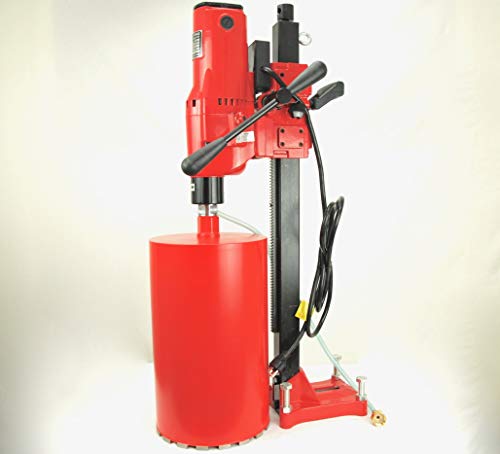
Core drill
BLUEROCK 10Z1
10" max · corded
Large-diameter value stand rig up to 10" for commercial concrete and utility penetrations.
Paid links. Specs on this site come from manufacturer documentation, not from the retailer.