Core Drilling for Plumbing
Plumbing penetrations need the right opening for pipe OD or sleeve OD plus clearance, not a guess from nominal pipe size alone. Material may be concrete, block, or reinforced concrete.
What this application requires
- Actual pipe or sleeve outside diameter
- Required clearance around the OD
- Wall or slab thickness
- Material and reinforcement
- Wet/dry and handheld vs stand based on size and access
Find a matching core drill
Typical hole sizes / job conditions
Typical diameter band in planning discussions: 1" to 6"always confirm the actual opening required.
- Drain/waste and water-line penetrations
- Sleeves for future pipe runs
- Nominal size ≠ hole diameter
Drill type requirements
Capacity ≥ calculated hole diameter. Setup follows depth and access.
Bit requirements
Exact diameter from calculator, matching thread and material/rebar needs.
Find a compatible core bit
Wet vs dry considerations
Usually wet for concrete when required by the bit, follow documentation.
Wet vs Dry Core Drilling Guide
Handheld vs stand
Handheld for smaller openings, stand as diameter/depth grows.
Reinforcement / material considerations
Many plumbing walls/slabs are reinforced, check bit reinforcement level.
Size the opening from outside diameter, not from nominal pipe
Plumbing penetrations fail in the catalogue when someone treats a nominal trade size as the bit diameter. The opening has to clear the actual pipe outside diameter or the sleeve outside diameter, plus the clearance the project requires. Insulation, couplings, firestop devices, and future pull space can all increase that number. The Hole Size Selector is the correct first tool after those measurements exist.
The calculator is a sizing aid. Drawings, firestop listings, and code requirements can demand a different opening than the next catalogue diameter. Do not enlarge a specified hole because a preferred bit is in stock. After a diameter is known, capacity, wall or slab thickness, material, and wet or dry method still have to pass on both the machine and the bit.
Wall versus floor plumbing routes
A waste or water line through a wall inherits the horizontal-orientation problems on the walls page: slurry direction, one sided access, and fixation. A floor penetration inherits the slab problems: travel, slurry on the walking surface, and core drop-through. Plumbing intent does not override those setup fields. Choose handheld or stand from diameter, depth, and access, not from the trade name “plumbing.”
Typical plumbing conversations often sit in a smaller-to-moderate diameter band, but large sleeves exist. Handheld is common only while the documented handheld capacity covers the calculated hole. Stand use becomes the conservative path as diameter and repeat alignment grow. Never treat stand capability as proof that a stand is in the box.
Material, sleeves, and reinforcement
Plumbing openings may pass through concrete, block, or reinforced concrete. A masonry-capable bit is not automatically a rebar-capable bit. If the structure is unknown, do not assume NONE-level bits will survive steel. Filter on documented material and reinforcement fields for the exact variant. Sleeve OD can be larger than pipe OD, measure the sleeve that will actually be set.
Firestop and sleeve systems can dictate both diameter and annular space. CoringSpec does not replace those listings. After the opening is defined, use the Core Bit Finder with the selected drill so thread, adapter, method, and depth are checked together. Thread match alone never completes a plumbing penetration decision.
Wet work near occupied rooms and finished floors
Concrete plumbing cores are often wet when the bit requires water. That creates slurry in finished spaces, mechanical rooms, and occupied corridors. Plan containment before choosing equipment. Dry plumbing cores are eligible only with documented dry machine and bit paths plus dust control. Inconvenience of water is not a dry-method approval.
Electrical protection around wet equipment remains a site control issue. This page does not provide wiring or GFCI design. It does require that the selected machine’s documented method match the bit. See wet versus dry and then confirm both records. For commercial browsing after sizing, use Best Concrete Core Drills and Best Diamond Core Bits without treating those lists as pipe-size charts.
Decision order for this trade
Measure pipe or sleeve OD. Add required clearance. Convert to a catalogue diameter. Confirm wall or slab thickness against working length and travel. Identify material and likely reinforcement. Choose wet or dry from documented equipment and site controls. Then select a VERIFIED machine whose mode-specific capacity covers the hole and a bit family whose sampled variants can meet material, method, and thread.
The candidate lists below are generated from VERIFIED machines and from bit families that survive the application’s documentary filters. They are not a ranked plumber’s kit. If the opening is still unknown, stop at the hole size calculator. If the location may be post tensioned, stop at engineering review. The System Builder is the place to attach stand, adapter, gear, and water or dust requirements to the same job.
Worked plumbing sizing example
A 3-inch nominal drain is not a 3-inch bit. Measure the pipe outside diameter or the sleeve that will actually be set, add the clearance the firestop or drawing requires, and only then take the next catalogue diameter from the Hole Size Selector. If that result is 4 inches through a 6-inch wall, handheld eligibility depends on a documented handheld maximum of at least 4 inches. If the only matching VERIFIED machine is stand-only at that diameter, the plumbing trade name does not restore handheld use.
If the wall is reinforced, the bit variant needs a stated reinforcement level. If the run is through a slab, inherit slab travel and slurry rules rather than wall rules. Do not keep a favorite wet barrel when the selected machine is dry only, and do not keep a favorite cordless motor when its handheld limit is 3 inches. After the diameter is honest, the candidate VERIFIED machines and indexable families below are filters, not a plumber’s shopping list ranked by brand.
A second plumbing failure mode is using the coupler or hub OD after the pipe is solvent-welded, then discovering the sleeve listing needed still more annular space. Recalculate before the bit is ordered. If the Hole Size Selector has no matching catalogue diameter, that is a catalogue gap, not permission to grind a smaller barrel to size. Leave the opening unresolved until a documented diameter exists.
Compatible Diamond Bit Families for This Trade
Verified diamond bit families selected for diameter availability, segment bond matrix, and application compatibility.
EDiamondTools WBP-A4 Wet Core Bits
VEVOR Wet Core Bit Family
Common mistakes / limitations
- Using nominal pipe size as the bit diameter
- Forgetting sleeve OD vs pipe OD
- Skipping clearance
Safety / claim standard
- Confirm utilities and structural constraints on site.
- Follow manufacturer and project procedures.
Recommended tools
Calculate your core hole size from actual OD + clearance, not nominal trade size.
Next steps & equipment selection
Related applications
- Applications hub
- Core Drilling Reinforced Concrete
- Core Drilling Concrete Walls
- Core Drilling Concrete Slabs
- Core Drilling for HVAC
- Core Drilling for Electrical Conduit
Related guides & operating procedures
- Core Hole Size & Pipe Sleeve Calculator
- Best Core Drills for Plumbers
- Best 4-Inch Core Drills
- Best 6-Inch Core Drills
- How to Remove Jammed Core Slug from Barrel
Sources
Recommendations are generated from CoringSpec catalog fields (material, reinforcement level, capacity, wet or dry drilling, handheld or stand mounted use). Manufacturer documentation remains the authority for each machine and bit.
Products for this page


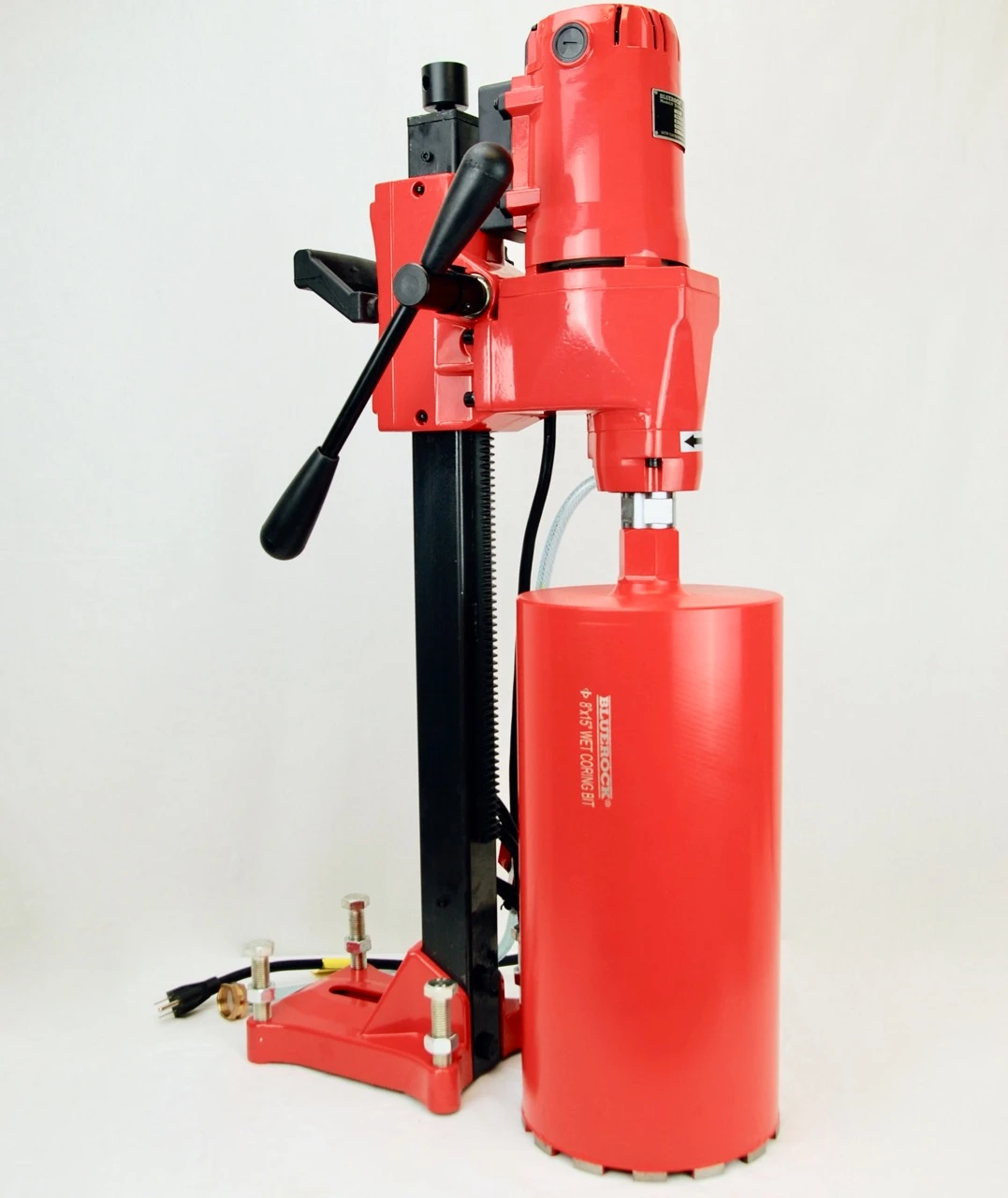
Core drill
BLUEROCK 8Z1
8" max · corded
Mid-size stand-mounted coring up to 8" in reinforced concrete, block, and masonry.

Core drill
VEVOR 10" 2500W Rig
10" max · corded
Budget large-hole stand coring up to 10" with documented deep travel.
Paid links. Specs on this site come from manufacturer documentation, not from the retailer.