Core Drilling for HVAC
HVAC penetrations cover line sets, condensate, ventilation sleeves, and larger openings in concrete or masonry. There is no universal HVAC hole size, use actual OD / sleeve OD in the calculator.
What this application requires
- Line set, duct, or sleeve outside diameter
- Clearance requirements
- Wall thickness and material
- Access for handheld vs stand
Find a matching core drill
Typical hole sizes / job conditions
Typical diameter band in planning discussions: 2" to 8"always confirm the actual opening required.
- Refrigerant line sets and condensate
- Ventilation / sleeve openings
- Masonry and concrete walls
Drill type requirements
Capacity for calculated opening, stand for larger sleeves.
Bit requirements
Diameter from OD + clearance, material compatibility documented.
Find a compatible core bit
Wet vs dry considerations
Match bit/drill documentation for concrete vs masonry.
Wet vs Dry Core Drilling Guide
Handheld vs stand
Stand increasingly relevant for larger openings.
Reinforcement / material considerations
Concrete HVAC openings may hit rebar, filter reinforcement level.
There is no universal HVAC hole size
HVAC penetrations cover refrigerant line sets, condensate drains, ventilation sleeves, and larger duct or sleeve openings in concrete or masonry. None of those has a single catalogue diameter. Line-set insulation, pairing two pipes, condensate slope, and sleeve OD all change the opening. Start with the actual outside diameter of the object or sleeve that must pass, plus project clearance, then use the Hole Size Selector.
A “standard AC hole” habit produces undersized or oversized cores. Undersized holes damage insulation or prevent a listed sleeve. Oversized holes create firestop and structural problems the catalogue cannot bless. Project documents remain authoritative. After a diameter exists, the drill must have capacity in the mode that will be used, and the bit must exist at that diameter with matching method and material evidence.
Access, diameter, and mounting
Many HVAC openings are in exterior walls, mechanical rooms, or rooftop curbs with limited staging. Handheld equipment helps only while the documented handheld capacity covers the calculated hole. Larger ventilation sleeves usually belong on a stand mounted path with documented travel and fixation. Do not borrow a rig capacity for a handheld wall core through a condenser chase.
Wall HVAC work should be read with wall application constraints: orientation, slurry, and one sided access. Roof or slab openings should be read with slab constraints: travel, slurry containment, and core retrieval. HVAC as a trade label does not merge those setups into one machine class.
Material and reinforcement on HVAC routes
Exterior concrete walls and masonry infill are both common. A masonry bit statement is not a reinforced-concrete statement. Rebar around openings, lintels, and slabs is common enough that unverified bits should not be treated as rebar tools. If the wall construction is unknown, confirm it before choosing a family reputation.
Line-set holes are often smaller than plumbing sleeves, which can keep more VERIFIED handheld machines in play , but only after diameter, method, and thread pass. Larger fresh-air sleeves can exceed handheld limits quickly. Use the Core Drill Finder with the calculated diameter rather than picking from an HVAC aisle memory.
Wet, dry, and occupied mechanical spaces
Wet coring in mechanical rooms creates slurry around equipment that may not be designed for standing water. Dry coring creates dust around coils, intakes, and occupied air paths. The eligible method is the one both the machine and the exact bit document, plus the site’s ability to contain the byproduct. Missing a water tank does not create a dry approval. Missing a dust shroud does not create a wet approval.
Refrigerant work and hot work nearby are project-safety issues outside this catalogue. CoringSpec only keeps equipment method, capacity, and connection honest. See wet versus dry and wet versus dry bits. Then confirm RPM for the selected diameter in the RPM Matrix instead of using a generic HVAC speed rumor.
How to read the candidate equipment
Machines listed here are VERIFIED records that match this application’s general filter. That filter is intentionally not a unique HVAC motor class; HVAC uses the same capacity, method, and mounting fields as other trades. The value of this page is the sizing and orientation discipline, not a separate compatibility engine. Bit families listed are documentary matches, not “best for Mini-Split” scores.
After candidates survive, confirm exact model identifiers, kit contents, spindle, bit SKU, and whether a stand or adapter is included. Use the System Builder for the full chain. Commercial next steps stay on Best Concrete Core Drills and Best Diamond Core Bits once the hole is defined.
Line set versus ventilation sleeve
A paired line set with insulation can need a larger opening than either pipe alone. Measure the bundle or the sleeve, not the copper trade size. A condensate drain is a separate smaller penetration with its own OD and slope. A fresh-air sleeve can jump into stand territory even when the line set hole stayed handheld. Treat those as three jobs if they are three openings. CoringSpec will not merge them into one “HVAC bit.”
Exterior masonry infill still needs material evidence on the exact variant. Interior concrete walls still need reinforcement evidence if steel is likely. Mechanical-room wet work still needs slurry control around equipment. Rooftop curb openings still need a travel and retrieval plan if they behave like slabs. After each opening is measured, this page’s VERIFIED candidate list is only a capacity-and-method shortlist. Confirm the spindle and bit SKU in the finders before buying from a commercial roundup.
If a line set hole and a condensate hole are cored on different days, keep two records. Borrowing yesterday’s 2.5-inch wet variant for today’s 5-inch sleeve is how capacity errors return. If the curb opening is specified by an HVAC drawing, that diameter wins over a catalogue habit. When the drawing and the selector disagree, follow the drawing and treat the selector as a check that a bit exists.
HVAC openings on this page do not have a separate motor class. They use the same VERIFIED catalogue, which currently contains 34 VERIFIED machines. A line set hole and a ventilation sleeve still have to be sized separately. Typical planning diameters recorded for this application are 2-8 inches, which is a conversation band rather than a required bit SKU.
Compatible Diamond Bit Families for This Trade
Verified diamond bit families selected for diameter availability, segment bond matrix, and application compatibility.
BLUEROCK Wet Core Bit Series
Husqvarna D1610 Series
Common mistakes / limitations
- Assuming a “standard HVAC hole” without measuring OD
- Ignoring clearance for insulation or sleeves
Safety / claim standard
- Follow project and manufacturer guidance, manage dust/slurry.
Recommended tools
Calculate your core hole size from actual OD + clearance, not nominal trade size.
Next steps & equipment selection
Related applications
- Applications hub
- Core Drilling Reinforced Concrete
- Core Drilling Concrete Walls
- Core Drilling Concrete Slabs
- Core Drilling for Plumbing
- Core Drilling for Electrical Conduit
Related guides & operating procedures
- Core Hole Size & Duct Clearance Calculator
- Best Core Drills for HVAC Contractors
- Best 6-Inch Core Drills
- Best 8-Inch Core Drills
- Best 10-Inch Core Drills
Sources
Recommendations are generated from CoringSpec catalog fields (material, reinforcement level, capacity, wet or dry drilling, handheld or stand mounted use). Manufacturer documentation remains the authority for each machine and bit.
Products for this page
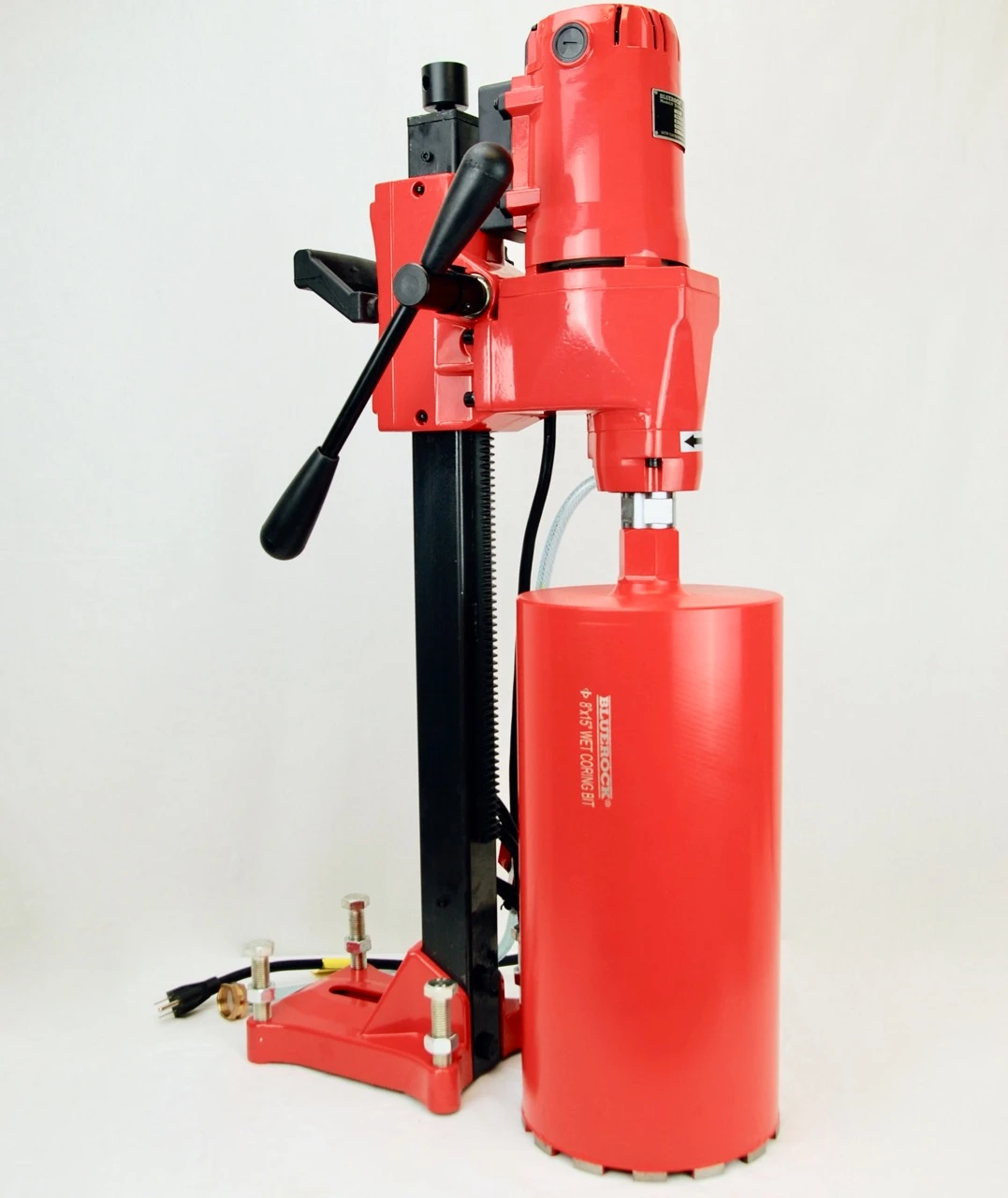
Core drill
BLUEROCK 8Z1
8" max · corded
Mid-size stand-mounted coring up to 8" in reinforced concrete, block, and masonry.


Core drill
VEVOR 10" 2500W Rig
10" max · corded
Budget large-hole stand coring up to 10" with documented deep travel.
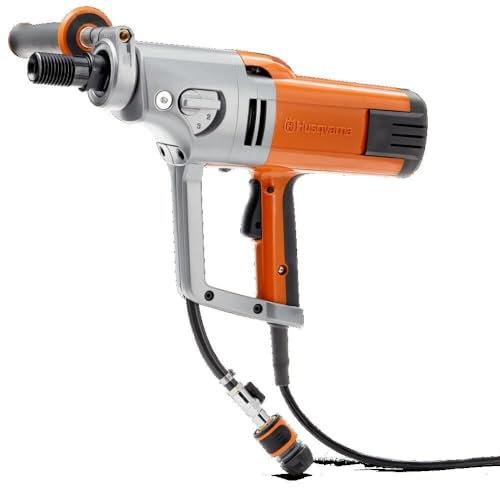
Paid links. Specs on this site come from manufacturer documentation, not from the retailer.