Core Drilling for Electrical Conduit
Conduit and cable-sleeve penetrations must use actual outside diameter plus clearance. Nominal conduit size is not the hole diameter.
What this application requires
- Actual conduit or sleeve OD
- Required clearance
- Wall or slab material and thickness
- Wet/dry and mounting setup
Find a matching core drill
Typical hole sizes / job conditions
Typical diameter band in planning discussions: 0.75" to 4"always confirm the actual opening required.
- Conduit penetrations and cable sleeves
- Panel/feed routes through walls or slabs
- Nominal size ≠ hole diameter
Drill type requirements
Capacity ≥ calculated opening, many electrical holes fit handheld classes when diameter is small.
Bit requirements
Exact size from calculator, thread match to drill.
Find a compatible core bit
Wet vs dry considerations
Per bit and material documentation.
Wet vs Dry Core Drilling Guide
Handheld vs stand
Handheld common for small conduit, stand when size or precision requires it.
Reinforcement / material considerations
Reinforced walls/slabs still need appropriate bit levels.
Conduit trade size is not the core diameter
Electrical penetrations must start from the actual conduit or sleeve outside diameter plus required clearance. EMT, RMC, PVC, and listed sleeves have different outside diameters at the same nominal trade size. A “three-quarter-inch hole for three-quarter conduit” is a common error. Use measured OD, then the Hole Size Selector, then confirm that the resulting bit exists in the catalogue.
Cable sleeves, panel feeds, and grouped conduits can require larger openings than a single EMT run. Firestop and annular space rules can also change the opening. CoringSpec does not replace those listings. It only refuses to treat a nominal trade size as a bit SKU. After diameter is known, capacity, depth, material, method, and thread still have to pass.
Why many electrical holes look handheld , until they are not
Typical electrical conversations often sit in a smaller diameter band, which is why this application’s machine filter prefers handheld capable VERIFIED records. That is a planning hint, not a rule that every electrical core is handheld. A large sleeve, a deep slab, or a precision gang opening can require a stand. Handheld eligibility still needs a documented handheld limit that covers the calculated hole.
Wall conduit routes should also satisfy wall orientation checks. Slab feeds should satisfy slab travel and slurry checks. Electrical as a trade does not waive those. Stand capability on a cordless motor does not mean the offer includes a stand, vacuum base, or anchors.
Water, dust, and live electrical environments
Wet coring near electrical rooms and live equipment is a site control problem. CoringSpec does not design isolation, lockout, or GFCI programs. It does require that wet bits are used only with wet capable machines and a planned slurry path, and that dry bits are used only on documented dry paths. Do not choose dry solely because water is inconvenient near panels.
Silica dust from dry coring is also a site control problem. Generic vacuums are not automatically coring extraction systems in this catalogue. Follow manufacturer dust instructions for the exact equipment. See wet versus dry. If neither documented path can be controlled in that room, the correct catalogue result is to stop, not to improvise a third method.
Reinforcement, boxes, and through penetrations
Reinforced walls and slabs still require bit reinforcement verification. A small conduit hole can still encounter embedded rebar. Unrated bits should not be used in structural reinforced concrete. promoted to rebar tools because the opening is small. If steel is expected, use the same reinforcement discipline as reinforced concrete.
Through-penetrations need an exit face plan so the core does not damage conductors or occupied space on the far side. Blind holes need working length, not overall barrel length. Thread and adapter checks remain mandatory: a 1-1/4 inch bit on a smaller spindle is not a fit without a documented adapter path, and adapters are not auto-scheduled as indexable pages.
Using the candidate lists without turning them into a kit
The machines below are VERIFIED handheld capable records that survived this application’s filter. They are not an electrician’s recommended kit and not a cordless ranking. Inspect each record’s documented capacity, method, spindle, and configuration notes. specialty motors stay out of this indexed list even if a finder can use one sourced field.
Bit families are shown as documentary options, not as “best for EMT” scores. After sizing, open the Core Bit Finder with the selected drill. Commercial browsing can continue on Best Handheld Core Drills and Best Diamond Core Bits. Finish unresolved stand, adapter, gear, and control questions in the System Builder.
EMT, RMC, and sleeve OD are different numbers
EMT, RMC, and PVC at the same nominal trade size have different outside diameters. A listed sleeve can be larger still. Measure the object that must pass, add required annular space, and refuse to type “three-quarter bit” from memory. If the Hole Size Selector returns a 1.25-inch or 1.5-inch catalogue diameter, handheld VERIFIED machines that only document 1 inch do not pass. If grouped conduits share one sleeve, size the sleeve, not one stick of EMT.
Wet coring beside a live panel is a site control problem that this catalogue will not design. If neither a documented wet path with containment nor a documented dry path with specified dust control can be established in that room, stop. A small hole does not waive reinforcement evidence. A cordless motor does not waive thread evidence. The handheld capable VERIFIED list below is a filter for small openings, not an electrician’s recommended kit and not permission to skip lockout or silica rules.
If two conduits share one core, size the larger sleeve or the combined bundle, then confirm a single bit diameter that exists. Do not stack two undersized holes to avoid buying a larger barrel. If the panel schedule changes after the core is cut, that is a project problem the catalogue cannot unwind. Record the measured OD in the job notes so the finder inputs stay honest.
Compatible Diamond Bit Families for This Trade
Verified diamond bit families selected for diameter availability, segment bond matrix, and application compatibility.
Milwaukee Diamond Ultra Dry/Wet
EDiamondTools WBP-A4 Wet Core Bits
Common mistakes / limitations
- Using nominal conduit trade size as bit OD
- Ignoring clearance and sleeve OD
- Water near live electrical without site controls
Safety / claim standard
- Electrical hazards and silica exposure require jobsite controls.
- Follow manufacturer and competent-person procedures.
Recommended tools
Calculate your core hole size from actual OD + clearance, not nominal trade size.
Next steps & equipment selection
Related applications
- Applications hub
- Core Drilling Reinforced Concrete
- Core Drilling Concrete Walls
- Core Drilling Concrete Slabs
- Core Drilling for Plumbing
- Core Drilling for HVAC
Related guides & operating procedures
- Best Core Drills for Electricians
- Best Cordless Core Drills (Battery Platforms)
- Best 4-Inch Core Drills
- Diamond Core Bit Thread Size Guide
- Hole Size Calculator
Sources
Recommendations are generated from CoringSpec catalog fields (material, reinforcement level, capacity, wet or dry drilling, handheld or stand mounted use). Manufacturer documentation remains the authority for each machine and bit.
Products for this page
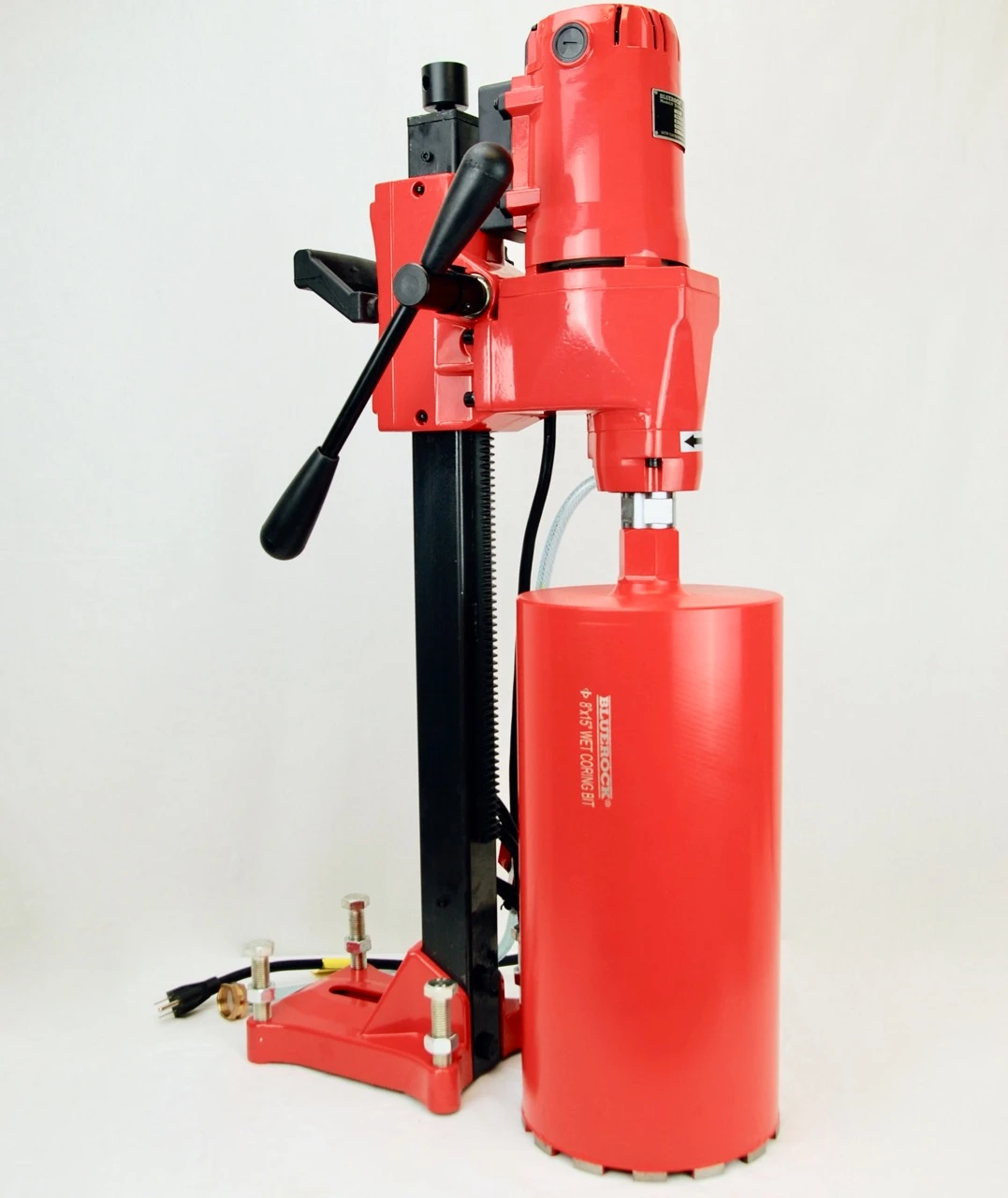
Core drill
BLUEROCK 8Z1
8" max · corded
Mid-size stand-mounted coring up to 8" in reinforced concrete, block, and masonry.

Core drill
Husqvarna DMS 400
14" max · corded
Medium-heavy wet stand coring to 14" as a motor+stand US system.


Paid links. Specs on this site come from manufacturer documentation, not from the retailer.