CoringSpec Editorial
Quick Answer: Concrete slurry generated during wet core drilling must be captured at the source using a rubber slurry collection ring connected to a dedicated wet vacuum. Slurry has a high alkaline pH (11-13) and contains respirable silica; it must never be washed down storm drains or sewer systems. Solidify slurry with chemical solidifiers before disposal.
Environmental & Regulatory Constraints (EPA & OSHA)
Concrete slurry is a hazardous industrial waste byproduct. When water mixes with Portland cement and finely pulverized aggregate, calcium hydroxide leaches into the water, driving the pH up to 12.0-13.0 (equivalent to household bleach or ammonia). Federal Clean Water Act (CWA) and EPA National Pollutant Discharge Elimination System (NPDES) regulations strictly prohibit discharging high-pH slurry into municipal storm sewers, streams, or uncontained ground soil.
Slurry Collection Methods on the Jobsite
- Slurry Collection Ring & Wet Vac (Standard Slabs): A circular rubber/plastic containment ring with replaceable rubber diaphragm gaskets is positioned around the core bit. Connected to an industrial wet vacuum, the ring captures 95%+ of slurry the instant it exits the kerf.
- Suction Splash Shroud (Vertical Walls): For wall coring, a sealed magnetic or anchored shroud with lower drainage hose directs slurry into a capture bucket or vacuum wand.
- Plastic Sheeting & Catch Enclosures (Ceilings / Floor Penetrations): When drilling through an upper slab into an occupied lower room, construct a funnel catchment bag beneath the hole to capture water breakthrough before it damages tenant finishes.
Slurry Collection Equipment Comparison
| System | Application | Efficiency | Best For |
|---|---|---|---|
| Slurry Vacuum Ring | Horizontal slabs & floors | 95-99% capture | Finished commercial buildings, hospitals, retail stores |
| Wall Slurry Shroud | Vertical concrete walls | 85-92% capture | Basement walls, foundation penetrations |
| Sub-Slab Funnel Bag | Overhead breakthrough catch | 90-95% capture | Multi-story commercial core penetrations |
| Slurry Solidifier Polymer | Waste bucket treatment | 100% encapsulation | Jobsite solid waste container disposal |
How to Treat and Dispose of Slurry Legally
- Solidification (Chemical Treatment): Add super-absorbent polymer solidifier powder (e.g., SlurryDry or Slurry-Gel) directly to slurry buckets. Within 5 minutes, liquid slurry solidifies into a dry, granular solid that passes the EPA Paint Filter Test (EPA 9095B) and is safe for non-hazardous landfill disposal.
- Settling & Evaporation: In outdoor yards, pump slurry into settling troughs. Clear surface water can be pH-neutralized with citric acid and reused for diamond tooling, while settled sludge is scraped and dried.
Related Guides & Directory Hubs
- Water supply regulation: Core Drill Water Supply Guide
- Water & slurry systems hub: Core Drill Water Systems Hub
- Wet vs dry drilling decision: Wet vs Dry Core Drilling Guide
- Explore verified core bits: Diamond Core Bits Catalog
Sources
Slurry compliance standards sourced from EPA National Pollutant Discharge Elimination System (NPDES), OSHA Silica Standard 1926.1153, CSDA Slurry Management Best Practice CSDA-SM-01, and Clean Water Act Guidelines.
Slurry Capture in Multi-Story Occupied Buildings
Drilling in occupied hospitals, multi-tenant high-rises, and cleanroom facilities requires a multi-barrier containment protocol:
- Top-Side Containment: Slurry vacuum ring clamped around the bit, powered by an OSHA Table 1 compliant HEPA-filtered wet or dry drilling vacuum with automatic filter cleaning.
- Bottom-Side Drop Containment: Seal a heavy-duty vinyl containment funnel directly below the target hole on the floor below, running a drain hose into a 55-gallon recovery drum.
- Air Quality Protection: Because dry concrete dust contains respirable crystalline silica (a known carcinogen), wet collection minimizes airborne dust emissions and keeps exposure controlled; however, workers handling dried slurry cakes must wear N95/P100 respirators during disposal.
OSHA Respirable Crystalline Silica Compliance (1926.1153)
Concrete slurry and dried core drilling residue contain high concentrations of respirable crystalline silica (quartz particles <10 microns in diameter). Chronic inhalation of microscopic silica dust causes irreversible silicosis, lung cancer, and chronic obstructive pulmonary disease (COPD).
Under OSHA 29 CFR 1926.1153 Table 1, wet core drilling with continuous water delivery directly to the cutting face is a recognized engineering control that keeps airborne silica concentrations below the Permissible Exposure Limit (PEL) of 50 micrograms per cubic meter of air (50 µg/m³) over an 8-hour shift, providing an established engineering control under Table 1 when operated in accordance with manufacturer instructions.
Slurry Vacuum Maintenance & HEPA Filtration
When using wet vacuums to extract slurry, clean the intake float shutoff valve and replace foam pre-filters daily. Concrete slurry dries into a rock-hard crust inside vacuum hoses and tanks; always flush 2 gallons of clean water through the vacuum wand at the end of each shift to prevent hardened blockages.
Products for this page


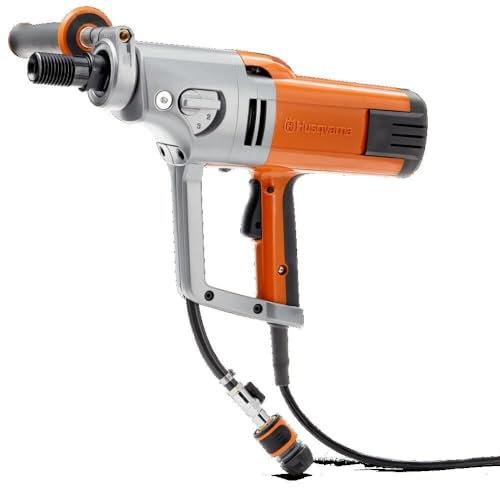
Core drill
CS Unitec END 130/3.2 PO
6" max · corded
Wet coring in confined spaces, handheld to 3-1/4", rig to 6"

Core drill
BLUEROCK 4Z1
4" max · corded
Budget handheld (optional stand) for 1", 4" holes in concrete, block, brick, or asphalt.
Paid links. Specs on this site come from manufacturer documentation, not from the retailer.